

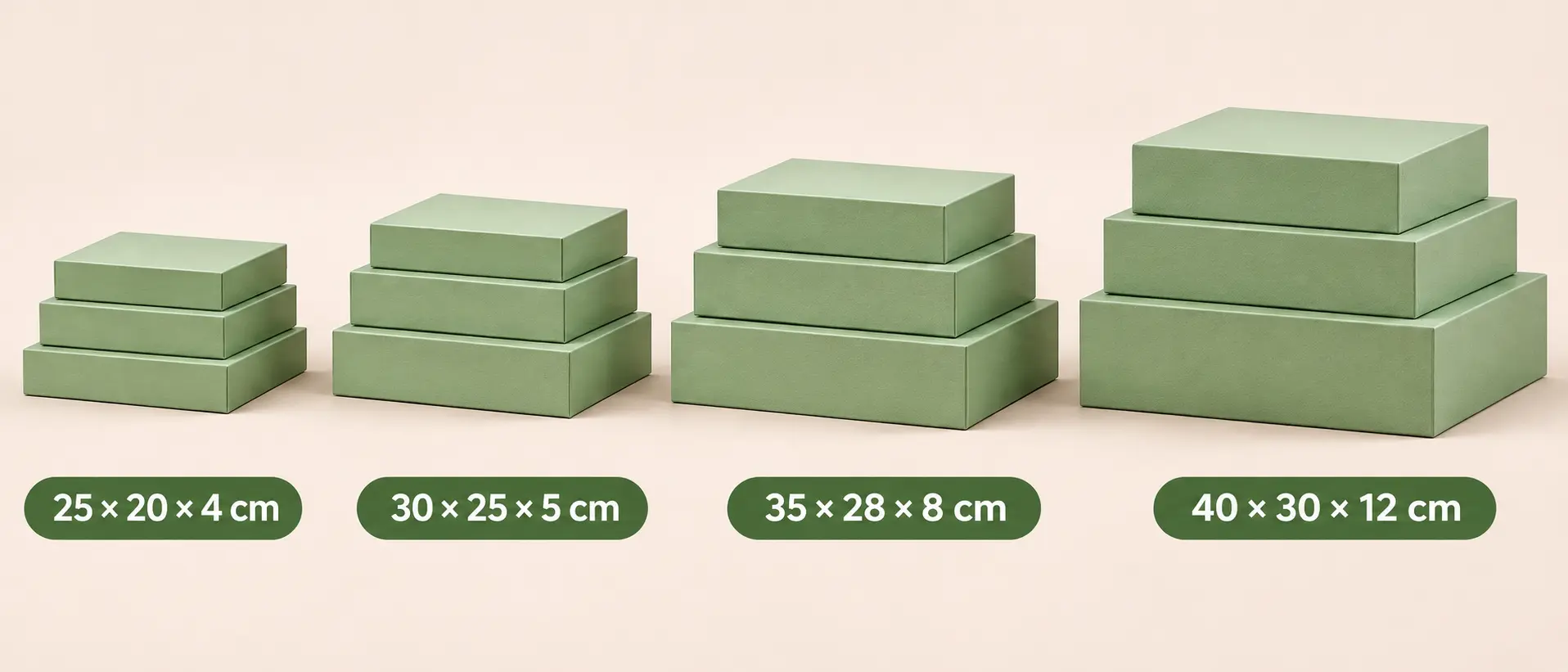
Shirt box dimensions typically range from 25 × 20 × 4 cm for lightweight T-shirts to 35 × 28 × 8 cm for thicker garments. However, there is no universal box size suitable for every clothing product. The ideal dimensions depend on folded garment measurements, fabric thickness, packaging accessories, and presentation requirements.
For clothing brands, retailers, and wholesale buyers, selecting suitable shirt boxes helps maintain product presentation, reduce unnecessary material consumption, and improve storage efficiency.
Whether you are purchasing shirt size gift boxes for retail stores or developing customized packaging for an online fashion brand, understanding apparel box sizes is essential before placing bulk orders.
Choosing suitable box dimensions is also an important part of developing an effective clothing packaging strategy for your business.
What Are the Standard Shirt Box Dimensions?
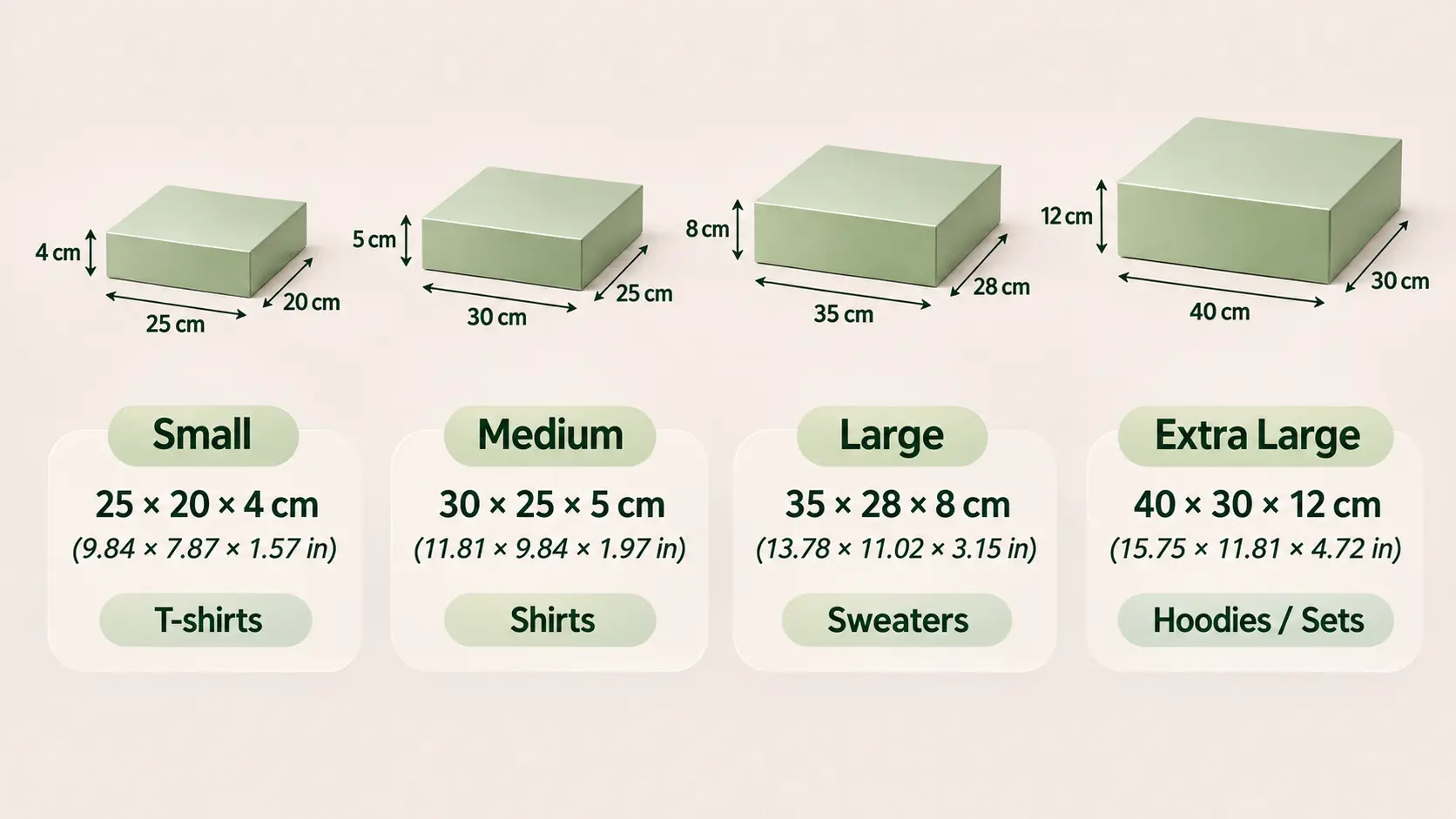
Shirt box sizes vary depending on the garment type, folding method, and packaging application. Lightweight shirts generally require shallow packaging, while thicker garments need additional internal depth.
The following table provides suggested internal dimensions for different apparel packaging requirements.
| Box Size | Dimensions (cm) | Dimensions (inches) | Recommended Application |
|---|---|---|---|
| Small | 25 × 20 × 4 | 9.84 × 7.87 × 1.57 | Lightweight T-shirts |
| Medium | 30 × 25 × 5 | 11.81 × 9.84 × 1.97 | Standard shirts |
| Large | 35 × 28 × 8 | 13.78 × 11.02 × 3.15 | Thick shirts and sweaters |
| Extra Large | 40 × 30 × 12 | 15.75 × 11.81 × 4.72 | Hoodies and clothing sets |
All dimensions are presented in Length × Width × Height (L × W × H) format.
These measurements are illustrative design references rather than universal industry standards. Buyers should confirm the actual folded garment dimensions before selecting a packaging size.
Recommended Apparel Box Sizes for Different Garments
Different clothing products require different internal dimensions. Fabric thickness, garment size, folding style, and additional packaging components should all be considered.
T-Shirt Box Dimensions
T-shirts are generally lightweight and easy to fold. A box measuring 25 × 20 × 4 cm can accommodate some single lightweight T-shirts.
For oversized T-shirts or heavier cotton fabrics, a larger box may provide a more comfortable fit.
Dress Shirt Box Dimensions
Dress shirts require sufficient space to accommodate collars, buttons, and neatly folded sleeves.
A suggested starting size is 30 × 25 × 5 cm. Premium shirt brands can use customized lid and base boxes to maintain an organized retail presentation.
Hoodie Box Dimensions
Hoodies require additional packaging depth because of their thick fabrics, hoods, and drawstrings.
A box measuring 40 × 30 × 12 cm can serve as a starting reference for many folded hoodies, depending on their actual size.
Custom-sized corrugated mailer boxes are practical for clothing brands fulfilling online orders.
Sweater Box Dimensions
Knitted garments require sufficient internal space to avoid excessive compression.
A suggested size of 35 × 28 × 8 cm may suit moderately thick sweaters, while chunky knitwear may require deeper packaging.
Jeans and Trousers Box Dimensions
Jeans and trousers generally require rectangular boxes with sufficient length and depth to accommodate folded denim or heavier fabrics.
A box measuring 35 × 25 × 7 cm can be considered as an initial design reference.
Clothing Gift Set Box Dimensions
Shirt size gift boxes containing multiple garments or fashion accessories require additional space.
The final dimensions should accommodate all products, tissue paper, brand cards, and any internal compartments.
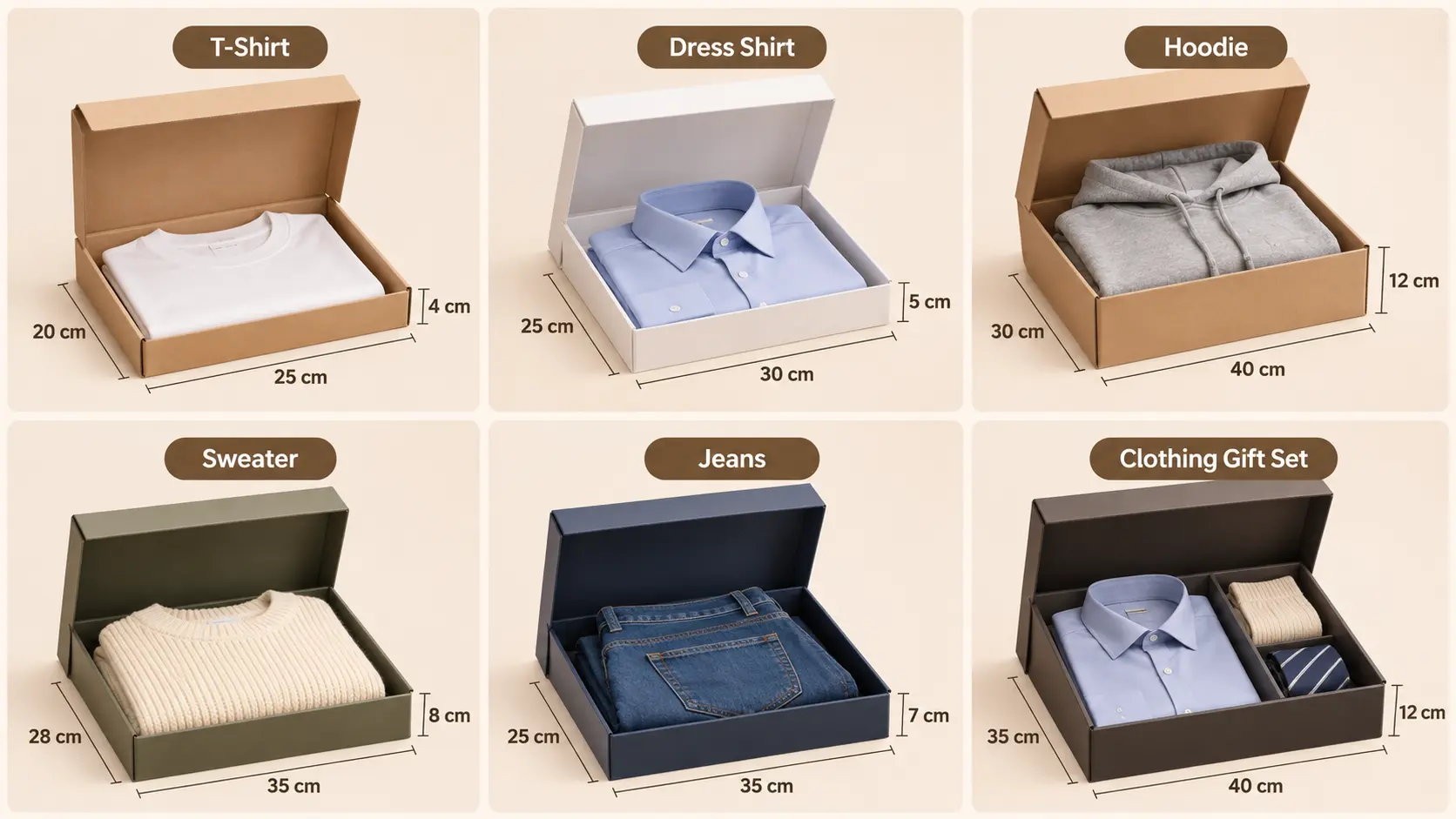
Apparel Packaging Size Reference Table
| Clothing Type | Suggested Size (cm) | Suggested Size (inches) |
|---|---|---|
| T-Shirt | 25 × 20 × 4 | 9.84 × 7.87 × 1.57 |
| Dress Shirt | 30 × 25 × 5 | 11.81 × 9.84 × 1.97 |
| Hoodie | 40 × 30 × 12 | 15.75 × 11.81 × 4.72 |
| Sweater | 35 × 28 × 8 | 13.78 × 11.02 × 3.15 |
| Jeans | 35 × 25 × 7 | 13.78 × 9.84 × 2.76 |
| Clothing Gift Set | 40 × 35 × 12 | 15.75 × 13.78 × 4.72 |
The actual clothing box dimensions should be adjusted according to garment specifications and packaging requirements.
How to Measure Clothing for Custom Shirt Boxes
Accurate garment measurements are essential when developing customized packaging. Incorrect measurements may result in boxes that are too small, excessively large, or unsuitable for the intended product presentation.
Step 1: Fold the Garment
Fold the garment according to its intended retail or delivery presentation. Use the same folding method that will be applied during actual order fulfillment.
Step 2: Measure the Length and Width
Place the folded garment on a flat surface and measure its maximum length and width.
Avoid stretching or compressing the fabric during measurement.
Step 3: Measure the Height
Measure the maximum thickness of the folded garment, including collars, buttons, hoods, and overlapping fabric layers.
Step 4: Allow Additional Packaging Space
Provide suitable clearance for tissue paper, hang tags, brand cards, and convenient product removal.
The required clearance depends on the garment and packaging structure.
Step 5: Confirm the Final Dimensions
Request a physical packaging sample to evaluate garment fit, internal space, and box closure before approving bulk production.
Shirt Box Dimension Calculation Example
Suppose a clothing brand provides a folded shirt measuring 28 × 22 × 4 cm.
| Measurement | Garment Size | Additional Allowance | Suggested Internal Box Size |
|---|---|---|---|
| Length | 28 cm | 2 cm | 30 cm |
| Width | 22 cm | 2 cm | 24 cm |
| Height | 4 cm | 1 cm | 5 cm |
In this example, the suggested internal shirt box dimensions would be 30 × 24 × 5 cm, or approximately 11.81 × 9.45 × 1.97 inches.
The additional space allows room for lightweight packaging accessories and easier garment removal. This allowance is illustrative and should be adjusted after sample testing.
Internal vs. External Clothing Box Dimensions
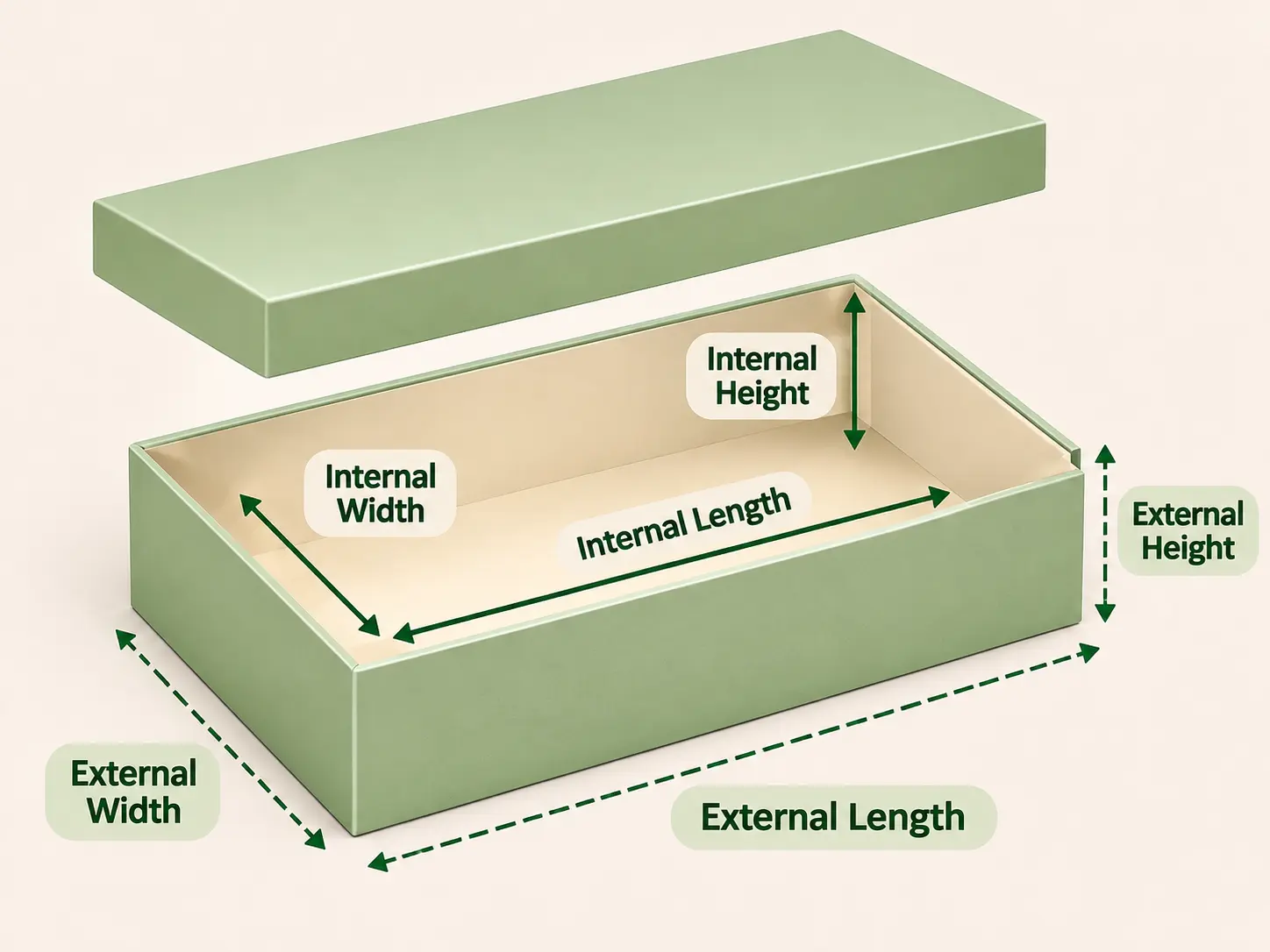
Understanding the difference between internal and external dimensions is particularly important when purchasing custom apparel boxes in bulk.
Internal Box Dimensions
Internal dimensions refer to the usable space inside the packaging box. They determine whether garments and additional packaging accessories can fit properly.
Buyers should primarily use internal dimensions when communicating product-fitting requirements to a packaging manufacturer.
External Box Dimensions
External dimensions refer to the overall measurements of the assembled box, including its structural materials.
These measurements are important for warehouse storage, master carton arrangements, stacking, and transportation planning.
| Measurement | Main Purpose |
|---|---|
| Internal Length | Garment fit |
| Internal Width | Product placement |
| Internal Height | Garment thickness |
| External Length | Storage and transportation |
| External Width | Master carton arrangement |
| External Height | Stacking efficiency |
Paperboard thickness, wrapping materials, lid construction, and folded sidewalls can influence the difference between internal and external clothing box dimensions.
Always confirm which measurement system is being used when reviewing supplier quotations and packaging specifications.
Common Mistakes When Choosing Shirt Box Sizes
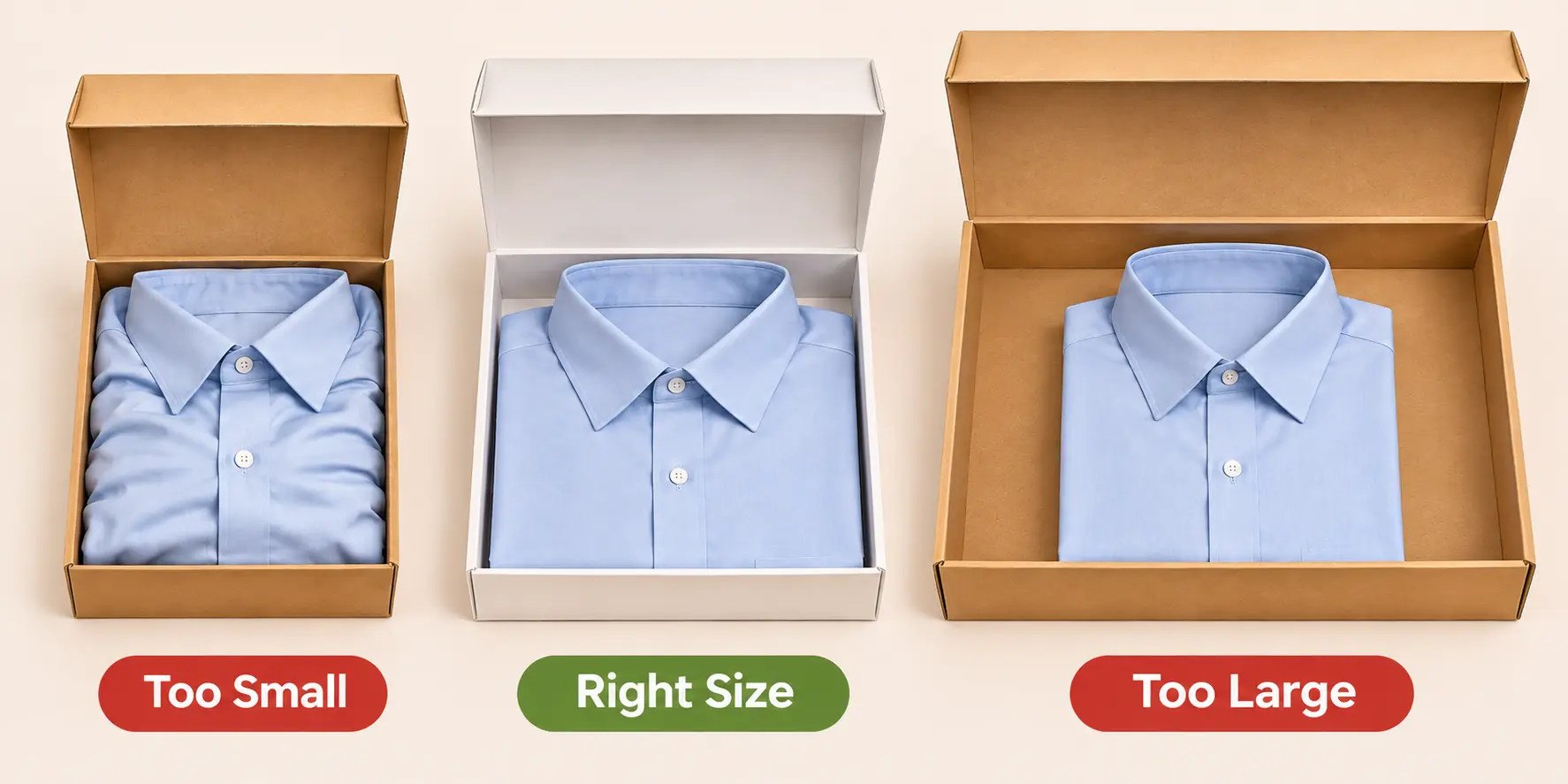
Clothing brands should avoid several common mistakes when determining packaging dimensions:
Measuring garments before folding them.
Confusing internal dimensions with external dimensions.
Ignoring the thickness of collars, buttons, and hoods.
Forgetting to reserve space for packaging accessories.
Selecting oversized boxes that create unnecessary empty space.
Using the same box size for garments with significantly different dimensions.
Approving bulk production without checking a physical sample.
An appropriate shirt box should hold the garment securely without excessive compression or unnecessary movement.
How to Optimize Apparel Box Sizes for Wholesale Orders
For businesses purchasing thousands of packaging boxes, dimensional optimization can influence material consumption, inventory management, and overall purchasing costs.
Reduce Unnecessary Empty Space
Oversized boxes increase packaging volume and may require additional filling materials.
Selecting dimensions that closely match folded garments can improve material efficiency while maintaining product presentation.
Standardize Box Sizes Across Product Lines
Instead of developing a separate packaging size for every garment, clothing brands can group products with similar folded dimensions.
A limited number of standardized box sizes can simplify purchasing, inventory management, and repeat production.
Improve Warehouse Storage Efficiency
Packaging dimensions influence how many finished boxes can be stored on shelves or packed into master cartons.
Businesses should evaluate external box measurements alongside product-fitting requirements to improve storage efficiency.
Reduce Packaging and Shipping Volume
For example, reducing a box’s external dimensions from 35 × 28 × 8 cm to 30 × 25 × 6 cm decreases its geometric volume from 7,840 cm³ to 4,500 cm³, a reduction of approximately 43%.
This adjustment may improve transportation efficiency if the smaller box still accommodates the garment properly. Actual freight savings depend on shipping methods, carton arrangements, and carrier pricing.
What Information Is Needed to Order Custom Shirt Boxes?
Providing complete specifications helps packaging manufacturers develop suitable structures and prepare accurate wholesale quotations.
| Required Information | Example |
|---|---|
| Garment Type | Shirt, T-shirt, hoodie |
| Folded Garment Size | 28 × 22 × 4 cm |
| Box Structure | Lid and base box |
| Internal Box Size | 30 × 24 × 5 cm |
| Packaging Material | Greyboard or corrugated board |
| Printing Requirements | Custom brand logo |
| Accessories | Tissue paper and paper tags |
| Order Quantity | 500, 1,000 or 3,000 pcs |
OnePlusOne Packaging provides custom apparel boxes with personalized dimensions, structures, materials, printing, and packaging accessories.
Our OEM and ODM manufacturing services support international clothing brands, wholesalers, retailers, and distributors.
The standard minimum order quantity is 500 pieces, and sampling typically takes 3–5 days, depending on the packaging specifications.
Conclusion
Selecting the right shirt box dimensions requires accurate garment measurements, appropriate internal clearance, and consideration of wholesale purchasing requirements.
Different apparel box sizes are suitable for different clothing products. By optimizing packaging dimensions and confirming physical samples before production, businesses can improve product presentation, reduce unnecessary space, and support efficient bulk purchasing.
OnePlusOne Packaging offers customized shirt boxes and clothing packaging solutions tailored to international B2B buyers.
Contact our packaging team to discuss your garment dimensions, packaging specifications, and wholesale order requirements.
Frequently Asked Questions
What are standard shirt box dimensions?
Common design references range from 25 × 20 × 4 cm to 35 × 28 × 8 cm.
What size box is best for a T-shirt?
A 25 × 20 × 4 cm box is a starting option for a lightweight folded T-shirt.
How do I measure a shirt for custom packaging?
Measure the folded shirt’s maximum length, width, and height, then allow suitable clearance.
What is the difference between inner and outer sizes?
Inner dimensions determine usable space, while outer dimensions determine overall box size.
Can I order custom-sized shirt boxes in bulk?
Yes. We offer customized shirt box dimensions with a standard MOQ of 500 pieces.