Custom cereal boxes help food brands create recognizable packaging, present product information, and improve retail shelf appeal. For cereal manufacturers, wholesalers, retailers, and private-label businesses, custom packaging provides flexibility in carton dimensions, materials, printing, and design.
OnePlusOne Packaging offers custom paper packaging solutions for overseas B2B customers. Our OEM and ODM services cover structural development, material selection, printing, finishing, sampling, and mass production.
Whether you are launching a new cereal product or updating an existing packaging range, choosing the right carton structure and manufacturing partner is essential. This guide covers the key considerations for developing and sourcing custom cereal boxes.
What Are Custom Cereal Boxes?
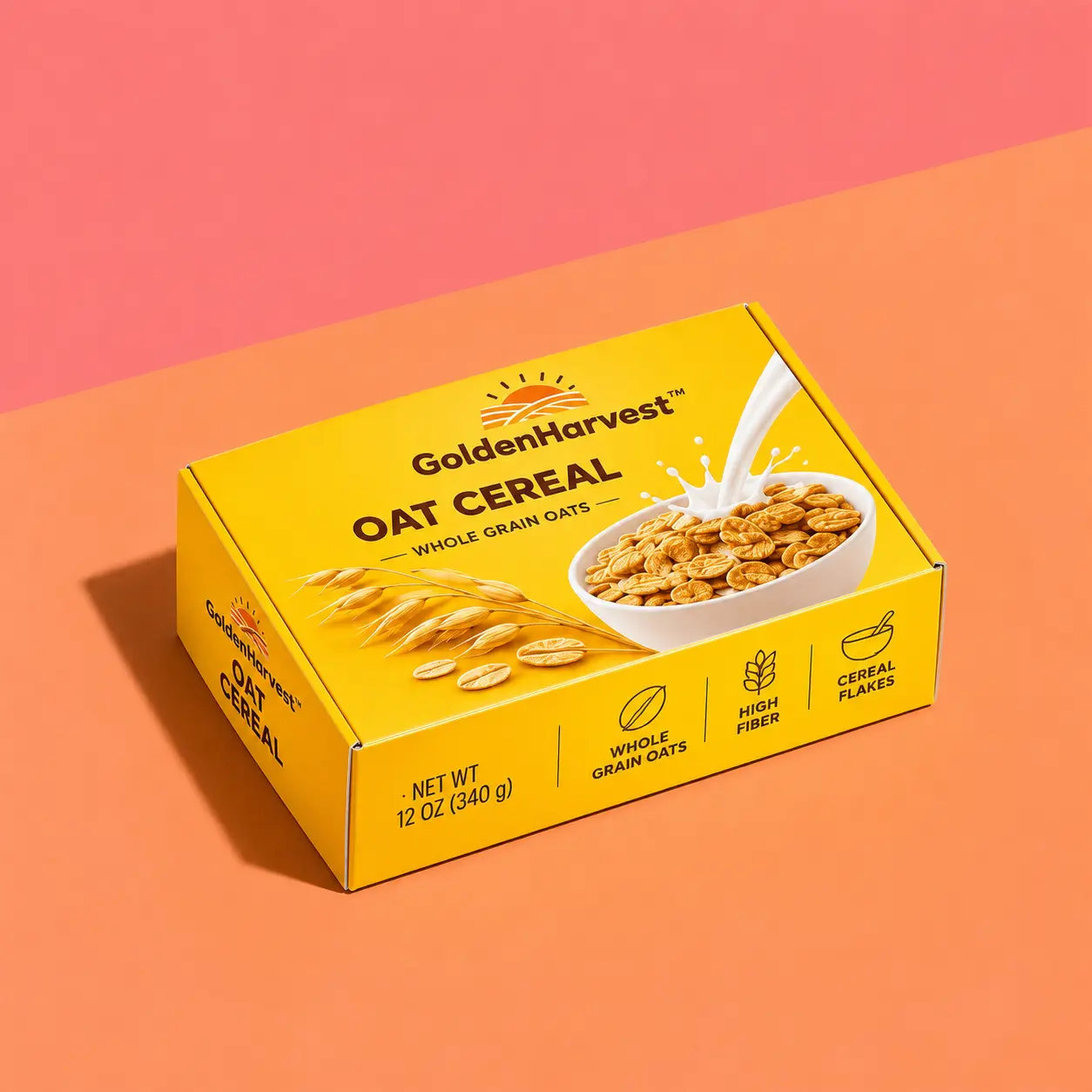
Custom cereal boxes are paperboard cartons manufactured according to a brand’s product specifications, packaging requirements, and visual identity.
Unlike standard stock cartons, custom packaging allows businesses to select the dimensions, structure, artwork, printing, and finishing of their boxes.
A typical cereal packaging system consists of an outer paperboard carton and a separate inner food bag. The carton provides space for branding and product information, while the inner bag holds the cereal.
Custom cereal packaging is suitable for:
-
Breakfast cereal brands.
-
Food manufacturers.
-
Private-label businesses.
-
Food wholesalers and distributors.
-
Retailers developing their own product lines.
-
Companies preparing promotional cereal products.
For B2B buyers, customized packaging also makes it easier to maintain consistent specifications across different products and production orders.
Why Choose Custom Cereal Boxes for Your Brand?
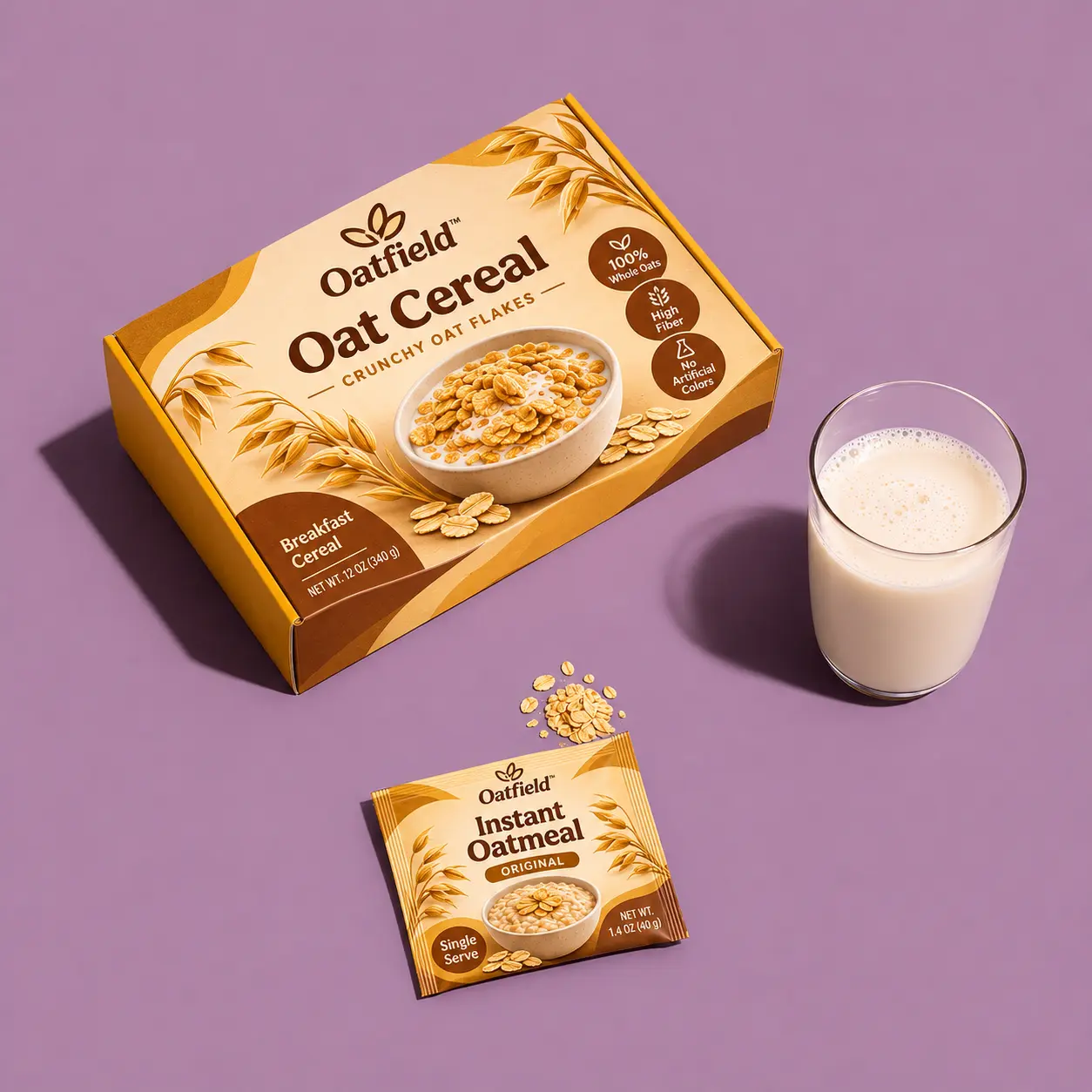
Packaging influences how customers recognize and compare products. A well-designed cereal carton helps communicate brand identity while meeting practical retail and distribution requirements.
Build Brand Recognition
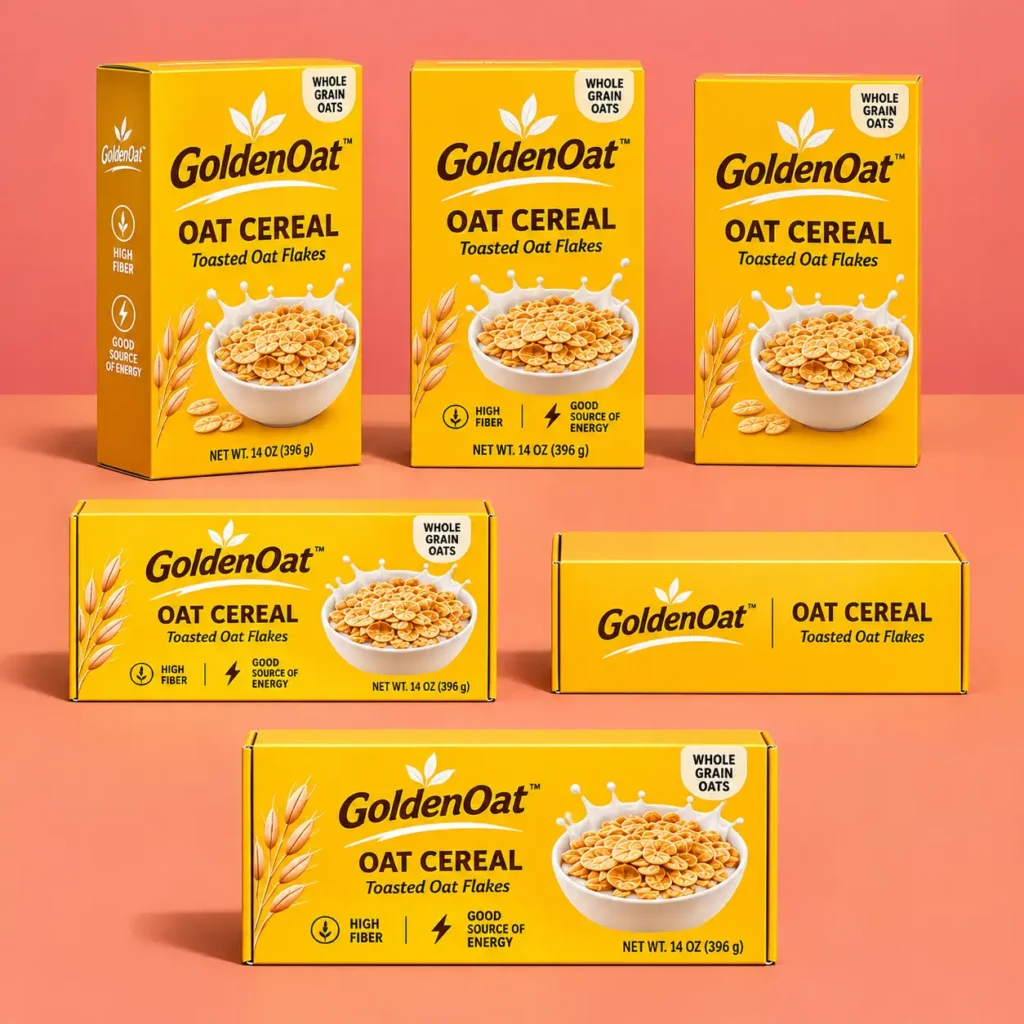
Custom colors, logos, typography, and graphics help establish a consistent visual identity. Brands can use coordinated packaging designs across different cereal flavors and product categories.
Improve Retail Shelf Appeal
Cereal products often compete for attention in supermarket aisles. Clear product names, attractive graphics, and suitable carton proportions can help packaging stand out.
Display Product Information
Paperboard cartons provide space for important product details, including:
-
Product name and flavor.
-
Ingredients and nutritional information.
-
Net weight.
-
Storage instructions.
-
Barcode.
-
Manufacturer or distributor information.
The layout should be planned carefully to keep information readable and organized.
Support Different Product Lines
Brands may need different carton sizes for breakfast flakes, granola, oat cereals, children’s cereals, and other breakfast products.
Custom packaging allows businesses to maintain a consistent brand appearance while adjusting the dimensions and artwork for different products.
Popular Custom Cereal Box Styles
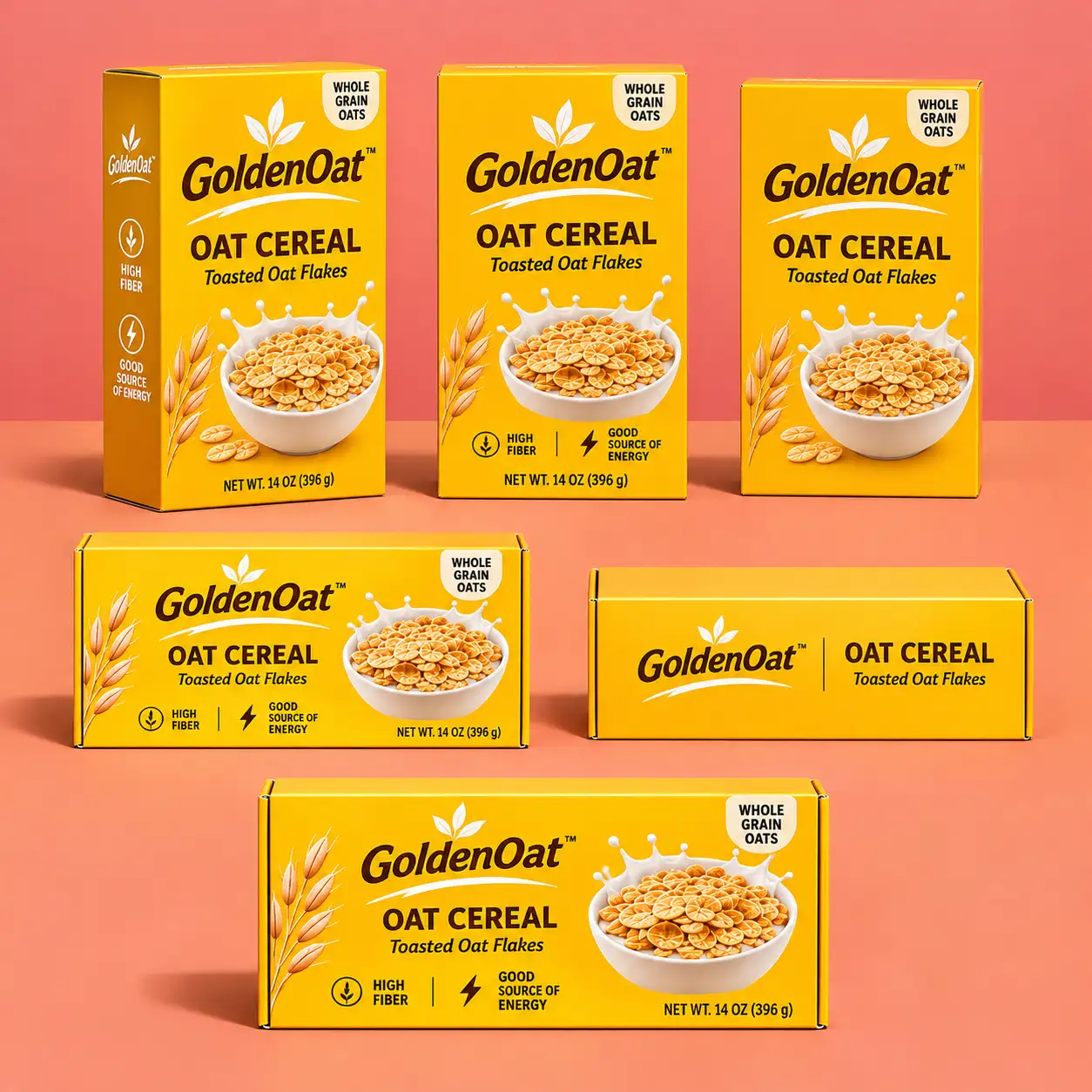
The right box style depends on the product volume, inner bag dimensions, filling method, and retail requirements.
Folding Carton Cereal Boxes
Folding cartons are commonly used for retail cereal packaging. They can be produced in different dimensions and customized with printed artwork, brand colors, and selected finishing options.
Their structure can be developed according to the product and packing requirements.
Custom Small Cereal Boxes
Small cereal cartons are suitable for single-serving products, samples, promotional campaigns, and selected food-service applications.
They provide a compact packaging format while allowing brands to maintain consistent product presentation.
Individual Cereal Boxes
Individual cartons are designed for single portions and may be used in breakfast kits, hospitality packaging, and promotional product sets.
Their dimensions should accommodate the inner food packaging without creating unnecessary empty space.
Custom Cereal Box Gift Packaging
Brands can also develop gift-oriented cereal packaging for seasonal campaigns, promotional collections, or special product launches.
These projects may involve larger outer cartons, coordinated artwork, or customized inserts to organize multiple products.
Custom Cereal Box Sizes and Dimensions
Cereal box dimensions depend on the product’s volume, net weight, inner bag size, and packaging requirements.
Most rectangular cartons are measured using three dimensions:
-
Height: The vertical measurement from the bottom to the top.
-
Width: The measurement across the front panel.
-
Depth: The measurement from the front to the back panel.
How to Choose the Right Size
Before confirming the carton dimensions, buyers should consider:
-
The product’s net weight and approximate volume.
-
The dimensions of the inner food bag.
-
The filling and sealing process.
-
The required carton proportions.
-
Storage, transportation, and retail display conditions.
A suitable carton should accommodate the inner packaging while maintaining its intended shape.
Standard and Custom Dimensions
There is no single universal cereal box size for every product. Different cereal types, weights, and markets may require different measurements.
A manufacturer can develop custom dimensions based on product measurements, reference samples, or existing packaging specifications.
Confirming the dimensions through a sample before mass production helps reduce structural and packing problems.
Materials Used for Custom Cereal Box Packaging
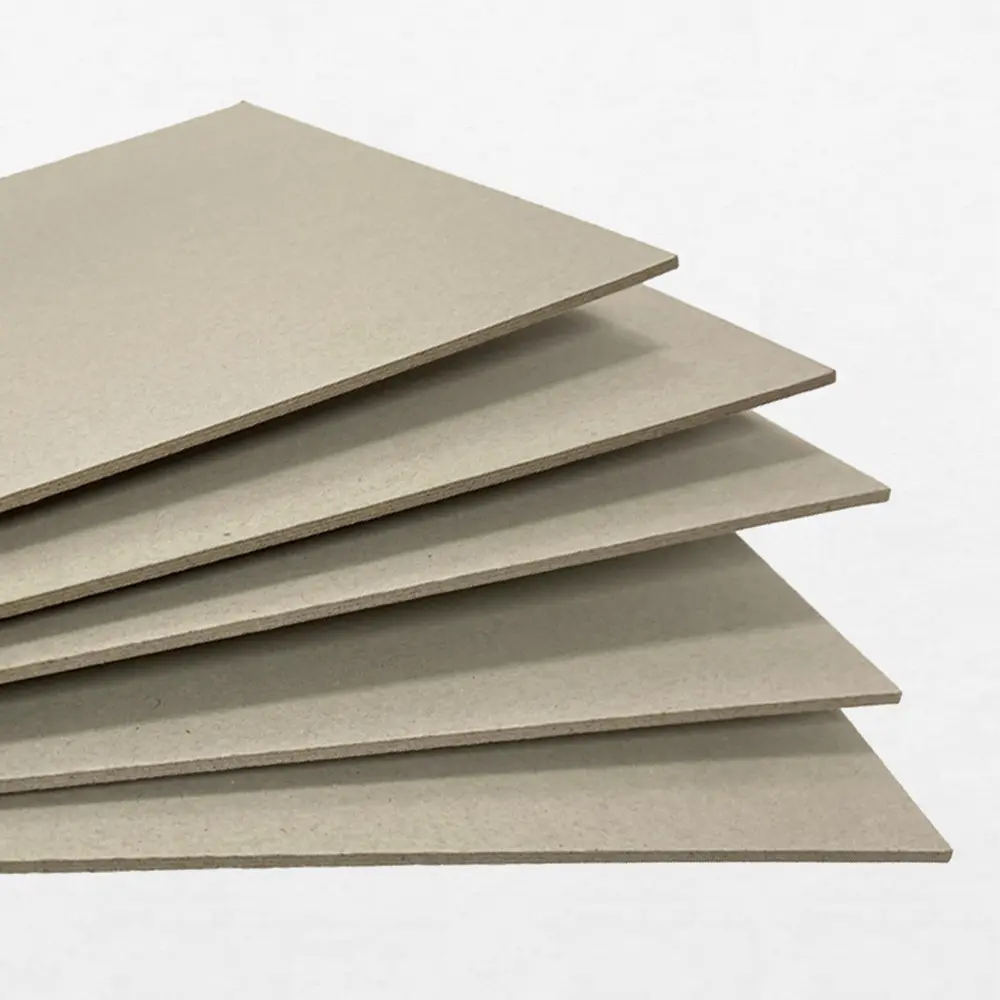
Paperboard is commonly used for folding carton cereal packaging. The selected material affects carton stiffness, printing performance, appearance, and production cost.
Paperboard Selection
When choosing paperboard, buyers should consider the carton size, structural requirements, surface characteristics, and desired printing quality.
Larger cartons or designs with greater depth may require different material specifications from smaller cartons.
Material Thickness and Box Strength
The paperboard needs sufficient stiffness to maintain the carton structure during filling, packing, storage, and transportation.
Material thickness should be evaluated together with the box dimensions and folding structure rather than selected by thickness alone.
Food Packaging Considerations
In many cereal packaging systems, the paperboard carton serves as the outer packaging, while a separate inner bag holds the food.
The inner bag should meet the applicable food-contact and barrier requirements for the product and target market. Ordinary printed paperboard should not automatically be considered suitable for direct food contact.
Buyers should confirm the packaging specifications and compliance requirements for the complete packaging system before production.
Custom Cereal Box Printing and Finishing
Printing helps transform a plain paperboard carton into branded retail packaging. The printing method and finishing options should be selected according to the artwork, material, order quantity, and desired appearance.
Offset Printing
Offset printing is commonly used for commercial paperboard packaging. It supports detailed graphics, text, and consistent brand colors across production batches.
It is suitable for cereal cartons featuring product photography, illustrations, logos, and detailed information.
Artwork Preparation
Before printing, buyers should confirm:
-
Carton dieline and panel layout.
-
Artwork resolution.
-
Bleed and safe areas.
-
Text readability.
-
Brand color specifications.
-
Barcode placement.
-
Product and regulatory information.
Final artwork should be checked carefully before production approval.
Surface Finishing
Depending on the packaging design, finishing options may include:
-
Matte lamination: Provides a smooth, less reflective appearance.
-
Gloss lamination: Creates a reflective surface that can enhance color presentation.
-
Other decorative treatments: Selected according to the design and production requirements.
The right finishing combination should balance appearance, budget, and practical requirements.
How to Design Custom Cereal Boxes
Effective cereal box design combines brand identity, product information, and retail presentation.
Front and Back Panel Design
The front panel usually highlights the brand name, product name, flavor, and main product graphics.
The back panel can contain product descriptions, ingredients, nutritional information, company details, and other required information.
Side panels may be used for additional product information, barcodes, or brand messaging.
Colors and Graphics
Choose colors and graphics that reflect the product and brand positioning. Different colors can help distinguish flavors and product variations while maintaining a consistent overall appearance.
Information Layout
Organize information according to its importance. Product names and key brand elements should be easy to identify, while detailed text should remain readable.
Before printing, check spelling, nutritional details, ingredients, net weight, and barcode information.
Consistent Packaging Across Product Lines
For brands with multiple cereal products, a coordinated packaging system can improve product recognition.
Using consistent carton structures and brand elements while adjusting selected colors and graphics is one practical way to create a unified product range.
Custom Cereal Box Manufacturing Process
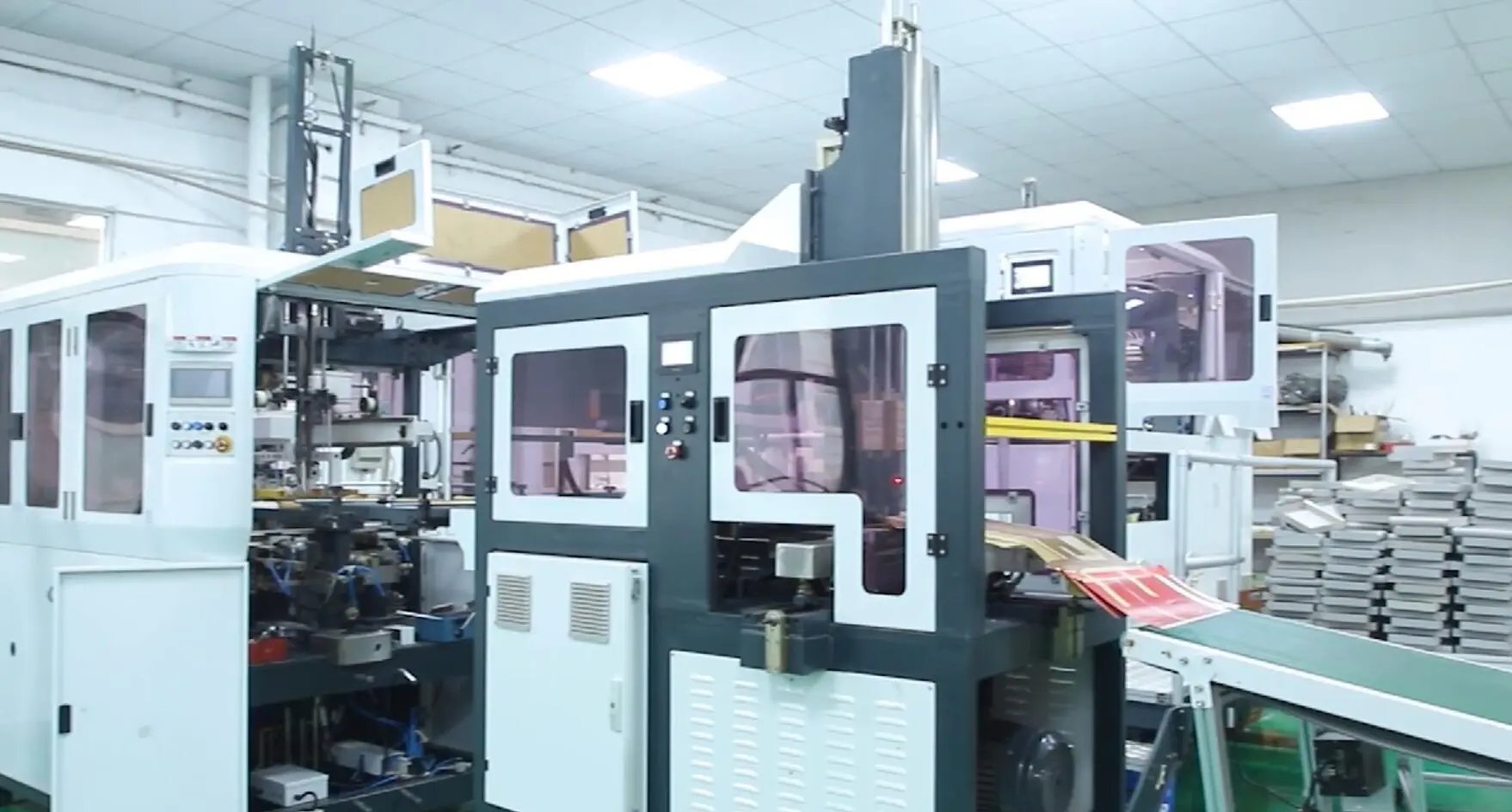
A clear manufacturing process helps ensure that the finished carton matches the buyer’s specifications.
Step 1: Discuss Packaging Requirements
Confirm the product type, estimated order quantity, packaging purpose, dimensions, and target market.
Step 2: Confirm Box Structure and Dimensions
Determine the carton style and measurements according to the product and inner bag.
Step 3: Select Materials and Printing
Confirm paperboard specifications, printing requirements, and finishing options.
Step 4: Prepare Artwork and Dieline
Arrange the artwork according to the carton structure, panel layout, and production requirements.
Step 5: Develop a Sample
Review the sample for dimensions, folding structure, artwork, and overall appearance before approving mass production.
Step 6: Mass Production
Proceed with printing, laminating, die-cutting, mounting, and gluing according to the confirmed specifications.
Step 7: Quality Inspection and Shipment
Check the finished cartons before packing. Confirm the packing method, shipping arrangements, and delivery schedule with the manufacturer.
How to Choose Reliable Custom Cereal Manufacturers?
Selecting a suitable manufacturer is important for maintaining packaging quality and production consistency.
Before placing an order, buyers should evaluate several factors.
Manufacturing Experience
Review the supplier’s experience with paper packaging, OEM/ODM projects, and customized carton production.
Equipment and Production Capabilities
Check whether the manufacturer can handle the required printing, lamination, die-cutting, and carton assembly processes.
Integrated production capabilities can help coordinate different manufacturing stages.
Quality Control
Ask about inspection procedures for carton dimensions, printing, color consistency, finishing, and finished product quality.
MOQ and Production Lead Time
Confirm the minimum order quantity, sample development schedule, mass production lead time, and delivery arrangements.
These details should be agreed upon before the order is confirmed.
OEM and ODM Services
OEM services allow buyers to manufacture packaging according to their own designs and specifications. ODM services can provide additional support with structural development and packaging design.
A manufacturer offering both services can support businesses at different stages of packaging development.
Why Work with OnePlusOne Packaging?
Guangzhou One Plus One Packaging is a custom paper packaging manufacturer serving overseas B2B customers.
Our manufacturing capabilities include:
-
13+ years of OEM/ODM experience.
-
A 1200+㎡ manufacturing facility.
-
More than 150 employees.
-
Over 94 sets of production equipment.
-
Approximately 680,000 paper boxes produced monthly.
-
Sample development generally within 3–5 days.
Our production capabilities include Heidelberg printing equipment, laminating, mounting, automatic die-cutting, and gluing.
We provide integrated packaging services covering design, material selection, printing, finishing, quality inspection, packing, and logistics.
Custom Cereal Boxes Wholesale: Ordering Guide
Wholesale purchasing is suitable for cereal brands, distributors, retailers, and food manufacturers that need packaging in larger quantities.
Minimum Order Quantity
MOQ depends on the carton structure, material, printing requirements, and production setup.
At OnePlusOne Packaging, the general MOQ starts at 500 pieces for custom packaging projects, subject to confirmation.
Sample Development
A pre-production sample allows buyers to check dimensions, structure, artwork, and overall appearance before mass production.
Our typical sample development time is 3–5 days, depending on the project requirements.
Factors Affecting Packaging Costs
The main factors influencing custom cereal box pricing include:
-
Box dimensions and structure.
-
Paperboard specifications.
-
Printing requirements.
-
Surface finishing.
-
Order quantity.
-
Sample and tooling requirements.
-
Packing and shipping arrangements.
Providing complete specifications helps manufacturers prepare more accurate quotations.
Bulk Production and Delivery
After sample and artwork approval, the order can proceed to mass production.
Buyers should confirm production schedules, quality inspection requirements, packing methods, delivery terms, and destination before approving the order.
Frequently Asked Questions
What are custom cereal boxes made of?
They are commonly made from paperboard. The carton usually serves as outer packaging, with a separate inner bag holding the cereal.
Can I order custom cereal boxes in small quantities?
Yes. OnePlusOne Packaging generally starts at an MOQ of 500 pieces, depending on the project specifications.
Can cereal boxes be made in custom sizes?
Yes. Custom dimensions can be developed according to the product volume, inner bag measurements, and packaging requirements.
What printing method is used for cereal boxes?
Offset printing is commonly used for commercial paperboard cartons because it supports detailed artwork and consistent colors.
How long does sample development take?
Sample development at OnePlusOne generally takes 3–5 days, depending on the carton structure and project requirements.
Can I provide my own logo and artwork?
Yes. Buyers can provide their own logo and artwork for review and preparation according to the carton dieline.
Can cereal boxes have different finishes?
Yes. Options may include matte or gloss lamination and other suitable decorative treatments, depending on the material and design.
Get a Quote for Custom Cereal Boxes
Looking for a reliable manufacturer for your custom cereal packaging?
OnePlusOne Packaging provides OEM and ODM paper packaging solutions, from structural development and sampling to printing and mass production.
Whether you are launching a new cereal product, developing a private-label packaging range, or sourcing cartons for wholesale orders, our team can help evaluate your requirements.
Send us your box dimensions, estimated quantity, artwork, or reference images to discuss your project and receive a quotation.
Contact OnePlusOne Packaging to develop your custom cereal boxes.